Tel: +255 784 241 648

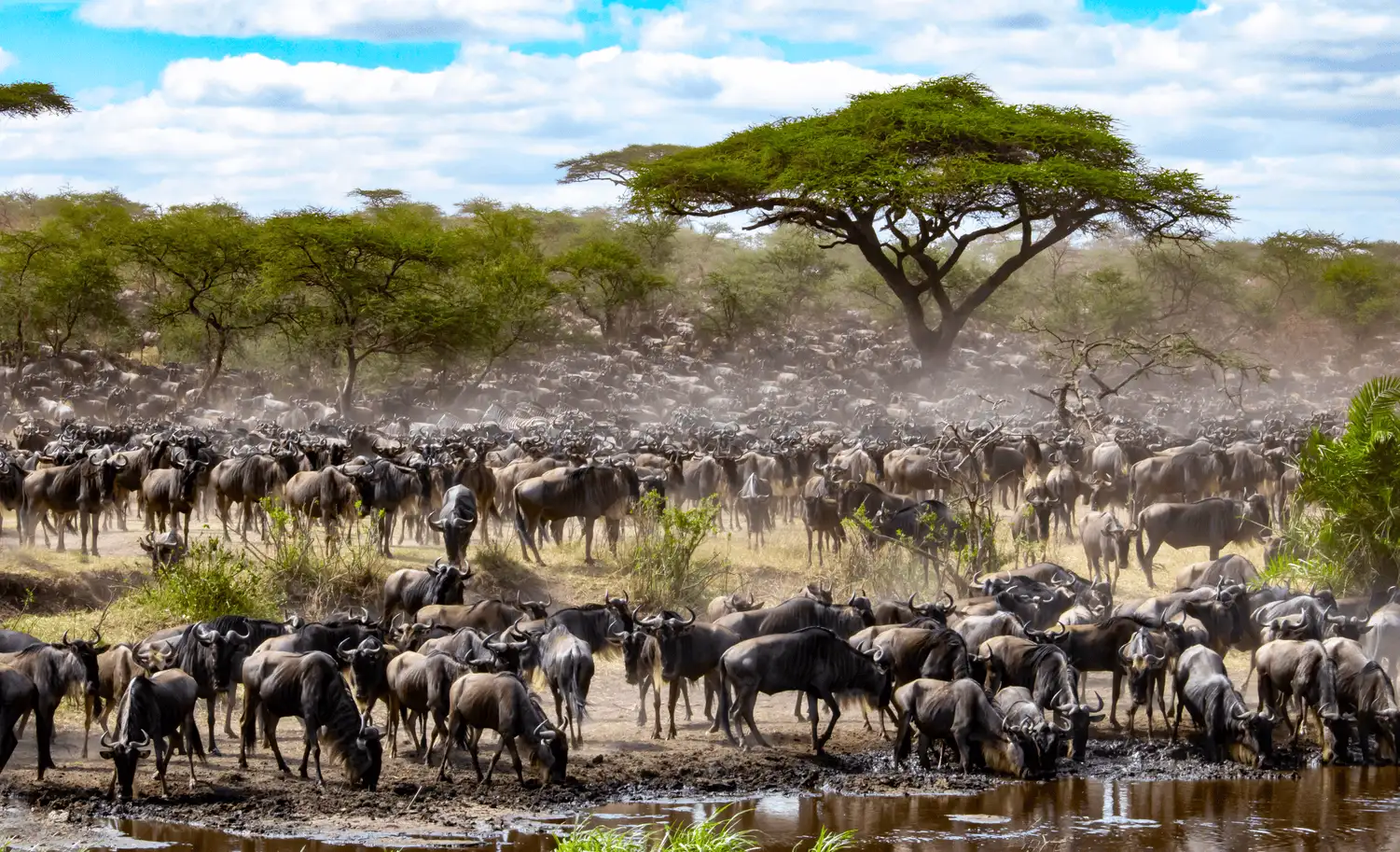
Synonymous with African safaris, Serengeti National Park is one of the most famous and iconic wildlife reserves in the world. Located in northern Tanzania, the Serengeti covers over 14,750 square kilometers of savannah, woodlands, and riverine landscapes, providing one of the most diverse and spectacular wildlife experiences on the planet. As one of the premier tourist attractions offered by Way 2 Africa Expeditions, the Serengeti offers visitors the chance to witness the grandeur of nature, from the “Big Five” to the awe-inspiring Great Migration.
Location and Geographic Significance
The Serengeti is part of the Serengeti ecosystem, which spans northern Tanzania and extends into southwestern Kenya’s Maasai Mara. Its varied landscapes, ranging from open plains and rolling hills to acacia woodlands and river valleys, create habitats for millions of animals. The park is globally recognized for its ecological significance, providing vital corridors for migratory wildlife and maintaining one of the most intact large mammal ecosystems in Africa.
Wildlife Diversity and Iconic Species
Serengeti National Park is home to an extraordinary diversity of wildlife, making it a paradise for safari enthusiasts and wildlife photographers. Highlights include:
The park is especially renowned for predator-prey interactions, providing some of the most dramatic wildlife encounters anywhere in Africa.
The Great Migration
One of the Serengeti’s most famous spectacles is the Great Migration, an annual movement of over 1.5 million wildebeest, accompanied by hundreds of thousands of zebras and gazelles, across the plains in search of fresh grazing. The migration follows a seasonal pattern:
Witnessing this natural spectacle is a once-in-a-lifetime experience and a highlight of any safari itinerary.
Scenic Landscapes and Photography Opportunities
The Serengeti is famed for its vast, open plains, dotted with acacia trees and kopjes (rock outcrops), offering stunning scenery and perfect conditions for wildlife photography. Sunrise and sunset over the Serengeti plains provide breathtaking colors, while riverine areas and kopjes create dramatic backdrops for observing lions, leopards, and other wildlife.
Safari Experiences with Way 2 Africa Expeditions
With Way 2 Africa Expeditions, travelers can enjoy a range of tailored safari experiences, including:
Our itineraries are designed to maximize wildlife sightings, comfort, and learning opportunities, ensuring every safari is memorable and enriching.
Conservation Significance
Serengeti National Park is a UNESCO World Heritage Site and a cornerstone of wildlife conservation in East Africa. It protects endangered species, maintains migration corridors, and preserves one of the world’s most intact ecosystems. Way 2 Africa Expeditions promotes responsible tourism, ensuring that each visit supports conservation, park management, and local communities.
Best Time to Visit Serengeti National Park
The Serengeti is a year-round safari destination. The dry season (June to October) offers easier wildlife viewing as animals gather near rivers and waterholes. The wet season (November to May) brings lush greenery, dramatic landscapes, and the calving season in the southern plains, providing excellent photographic opportunities and unique wildlife experiences.
Why Visit Serengeti National Park with Way 2 Africa Expeditions?
At Way 2 Africa Expeditions, we provide expertly guided safaris tailored to your interests, whether you are seeking predator action, birdwatching, photography, or the Great Migration. Our knowledgeable guides, luxury and midrange accommodations, and fully planned logistics ensure a safe, educational, and unforgettable safari experience. We combine adventure, comfort, and cultural insight, offering travelers a comprehensive Serengeti experience that goes beyond wildlife spotting.
Serengeti National Park is the heart of Tanzania’s safari experience, offering unmatched wildlife diversity, dramatic landscapes, and the unforgettable spectacle of the Great Migration. From lions stalking zebras on open plains to thousands of wildebeest moving across the savannah, the Serengeti is a destination that captivates the imagination and inspires awe. With Way 2 Africa Expeditions, travelers gain access to expertly guided, immersive, and responsible safari experiences, ensuring every moment in this legendary park is unforgettable.


Tel: +255 784 241 648 | info@way2africaexpeditions.com